


Classic Words With Friends
Zynga
I spent time with Classic Words With Friends as a relaxed word game rather than treating it like a quick novelty. Its appeal is easy to understand: you build words from letter tiles, think about placement, and either play alone or invite friends into a slower multiplayer match. That familiar formula still works well when I want something thoughtful but not exhausting.
This is a free word game from Zynga, available for Android devices running at least Android 6.0. It is rated for Everyone, so it is approachable for families, casual players, and anyone who enjoys vocabulary games without needing complicated controls. The game has been around since February 2011, and its current version is 49.01.02, which makes it feel more like an established title than a newly launched experiment.
My overall impression is positive, with an important qualification: this is best when you enjoy taking your time and learning from each board. If you want a completely quiet, offline-feeling word puzzle with no social pressure, a traditional crossword app may suit you better. If you like competing with people you know, however, the multiplayer design gives this game a reason to stay installed.
How the current game feels in everyday use
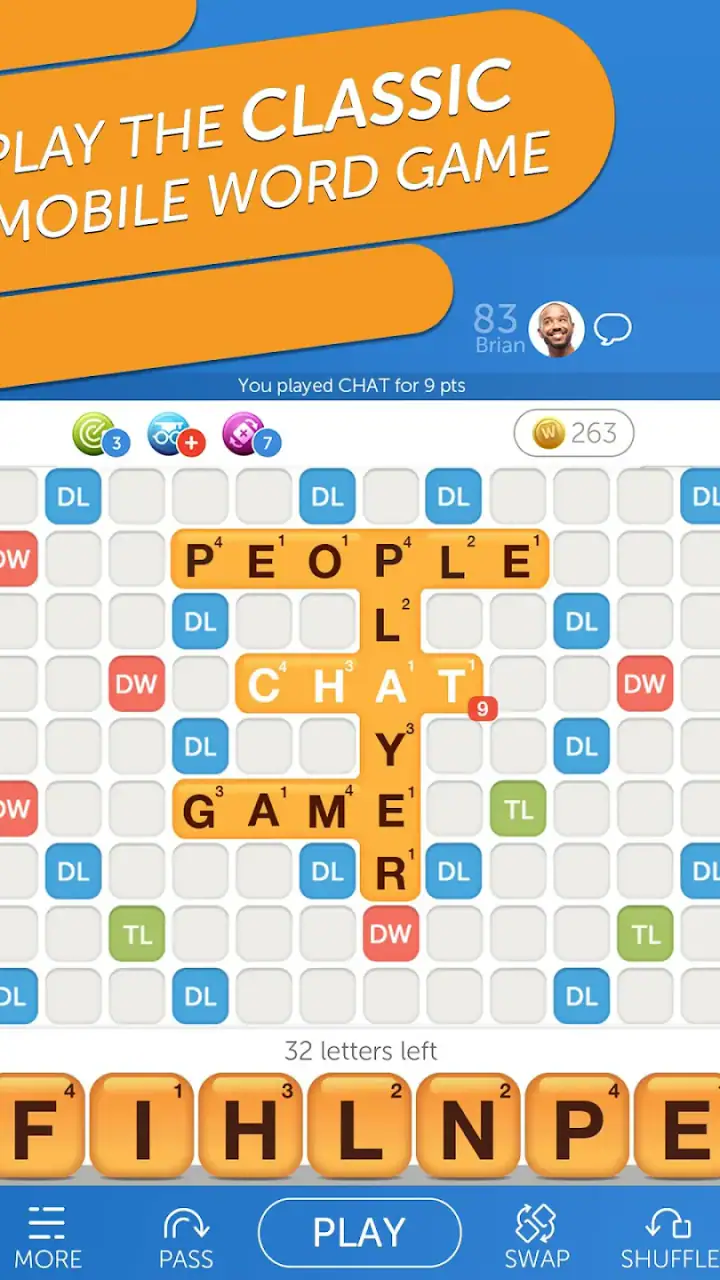
The basic experience is straightforward. I look at my available letters, search for a useful opening, and try to place a word where it earns a good score without giving the other player an easy premium square. That last part is what separates a merely valid word from a smart move. The board gradually becomes a negotiation between vocabulary, positioning, and patience.
Playing alone is useful when I have only a few minutes or do not want to wait for another person. It gives the game a puzzle-like rhythm: I can examine the board, test possible combinations mentally, and concentrate on making a strong move. The solo option also makes the app more practical for commutes, waiting rooms, or a quiet break when no friend is available.
Related News

Why WhatsApp Messenger Still Makes Everyday Communication Feel Easy

Jurassic World: The Game Is the Better Dino Tycoon for Strategic Players

Threads in Real Life: Who Should Join, Lurk, or Leave

How SHEIN Turned Shopping Into an Endless Content Feed

How to Make Fortnite Feel Smarter on Mobile

Should You Switch to Microsoft Outlook on Mobile?
Multiplayer changes the mood. A match does not require both players to be holding their phones at the same time, so it fits naturally around work, school, family routines, or different time zones. I can make a move, put the phone away, and return later. That asynchronous pace is one of the strongest reasons to choose this game over a word puzzle that expects a complete session in one sitting.
For a realistic daily example, I might start a match with a friend during lunch, make one careful move, and then leave the game alone while finishing the afternoon. Later, I can review the board and respond when I have enough attention to consider the consequences. It feels more like an ongoing conversation than a conventional arcade round, which is both its charm and its limitation.
The interface is easy to understand because the central action is visible immediately: letters, board spaces, and the current move. I did not need a long learning period to begin playing. The challenge comes from decision-making rather than controls, and that makes the game accessible to people who are comfortable with words but do not usually play mobile games.
Gallery
Still, “easy to start” does not mean “easy to master.” New players may initially focus only on making the longest word available. That approach can backfire because a shorter word may protect the board better or deny an opponent access to a valuable scoring location. The game rewards restraint, not just vocabulary size.
Why the board matters more than the largest word
One of the most useful habits I developed was checking the spaces around a planned word before committing it. A move that looks impressive in isolation may open a premium square or create several easy extensions for the opponent. I now ask two questions: what does this move score, and what does it leave behind?
Small words can be strategically important. They help connect difficult letters, close dangerous lanes, or use awkward tiles before the rack becomes uncomfortable. This is a good lesson for younger players as well as casual adults because it turns vocabulary into practical problem-solving rather than a simple test of who knows the longest word.
Another effective approach is to save flexible letters when the board is crowded. I do not treat every high-value tile as something that must be played immediately. Sometimes using a modest word preserves better options for the next turn. That kind of planning is where the game becomes more satisfying than a basic anagram exercise.
Players who are new to this style of game should resist judging themselves by one bad turn. A board can change quickly, and a low-scoring move may be correct if it improves the position. I found that reviewing why a move worked or failed was more useful than simply chasing the highest number on every turn.
Solo play and multiplayer serve different purposes
The solo mode is the better choice when I want a contained activity. It lets me focus on the board without worrying about whether another player is waiting. That makes it suitable for practicing letter management and learning to notice board patterns. It is also less socially demanding, which matters when I want a quiet game rather than a conversation.
Multiplayer is where the title feels most distinctive. A familiar opponent can make ordinary moves meaningful because you begin to recognize their habits. Someone may play aggressively for points, while another person may prefer defensive placements. Over time, the board becomes a record of different playing styles, not just a collection of words.
The trade-off is that asynchronous matches can lose momentum. If a friend stops responding, the game may feel unfinished rather than relaxing. This format works best when everyone understands that turns may take time. It is less suitable for people who want an immediate winner or a tightly timed competitive session.
I also think the social element is strongest among people who already have a reason to return. A casual invitation may produce a few moves and then fade. A regular opponent, family member, or group of friends gives the game a dependable rhythm. In that situation, the app becomes a small recurring activity rather than something opened once and forgotten.
What the long-running version means for players
The release history matters because this is not a brand-new word game trying to prove its concept. It has been available since 2011 and now sits at version 49.01.02. I read that as evidence of a product that has continued through many stages of mobile gaming, even though a version number alone does not tell me that every change will be equally important to every player.
For an existing user, the main benefit of a mature title is familiarity. The core idea remains recognizable, so returning players do not have to relearn an entirely different game. That continuity is valuable when the app is part of a long-running match with a friend. A major redesign could disrupt that simple habit, while a stable foundation makes it easier to pick up where I left off.
The downside of a long-running mobile game is that it may feel less focused than a minimalist puzzle built around one mode. Established games often have more history, more account-related expectations, and more opportunities for optional spending. I would not choose it solely because it has existed for a long time; I would choose it because the underlying turn-based word play fits my routine.
The store rating is around 3.9, based on roughly 1.7 million ratings, with about 562 thousand written reviews. That combination suggests a large and varied audience rather than universal agreement. I see the rating as a reason to approach the game with realistic expectations: many people clearly use it, but the experience will not satisfy every preference, especially among players sensitive to interruptions or monetization.
It has also passed the scale of a niche word puzzle, with over 50 million installs. That reach makes it easier to find friends who already recognize the game, but popularity should not be confused with a perfect fit. A large player base tells me the concept has broad appeal; it does not remove the need to consider whether I enjoy slow matches and strategic tile placement.
Free entry, optional spending, and practical expectations
The game is free to download, which makes trying the solo and multiplayer experience relatively low-risk. The in-app purchase range runs from $0.99 to $149.99 per item. I would treat that range as a reminder to review purchase choices carefully, particularly if the phone is shared with a child or if I prefer games with no commercial pressure.
For me, the right way to approach a free word game is to decide in advance whether I am willing to spend anything. If I am only interested in the board and the social match, I can keep the experience centered on those parts. If optional purchases become distracting, a paid crossword or premium word puzzle may offer a calmer alternative, even if it has fewer multiplayer connections.
The Everyone age rating makes the game broadly approachable, but an age label does not explain every family preference. Parents should still decide whether the app’s social and purchase elements fit the way a child uses a phone. For adults, the rating mainly confirms that the vocabulary-game format is not built around mature themes.
Device compatibility is another practical point. The minimum requirement of Android 6.0 covers many older Android phones, which is helpful for families or players who do not upgrade frequently. Performance can still vary by device, but the stated operating-system requirement means the game is not limited to only the newest hardware.
Where it compares well with other word games
Compared with a standard crossword app, this game is more flexible socially. A crossword usually gives me a fixed puzzle to complete, while this board develops through my decisions and another player’s responses. That makes the experience less solitary, but it also means I cannot always control the pace or the final shape of the challenge.
Compared with a timed anagram game, it is calmer and more strategic. I have room to consider placement instead of racing a clock. The trade-off is reduced intensity. Players who enjoy rapid rounds, instant feedback, and a clear beginning and ending may find a timed alternative more exciting.
Compared with a traditional physical board game, the mobile format is more convenient for remote play. I do not need to arrange a shared table or keep the tiles organized. On the other hand, the screen lacks some of the tactile satisfaction of handling real pieces, and the asynchronous format can make a match feel less like an event.
Compared with a dictionary or vocabulary trainer, this is more entertaining but less systematic. It can encourage me to notice word patterns and think about letter combinations, yet it is not a structured language course. Someone learning a new language would probably benefit more from an app designed around definitions, pronunciation, and planned lessons.
Small techniques that improve the experience
I recommend looking for board control before chasing a spectacular score. If a move uses a premium location, I check whether it also gives the opponent a simple way to build across another valuable area. This habit makes defensive play feel purposeful and prevents the common mistake of treating every high-scoring square as automatically good.
I also keep an eye on awkward letters instead of allowing them to accumulate. A low-value word that clears an uncomfortable tile can be better than waiting for a perfect combination that may never arrive. This is especially useful late in a match, when the remaining board space matters as much as the letters themselves.
When playing with a friend, I find it helpful to agree on the expected pace. The game’s turn-based structure supports delays, but people can interpret silence differently. A quick message outside the board can prevent a casual match from feeling abandoned. That is not a feature of the word system itself, but it makes a noticeable difference to how enjoyable multiplayer becomes.
For practice, I use solo play to test unfamiliar board situations rather than simply trying to maximize every turn. I pay attention to openings, blocked lanes, and the way a short word can create future options. This gives the solo mode a training role and makes later matches feel less dependent on luck.
Who should choose it and who should skip it
I would recommend this game to someone who enjoys vocabulary, prefers thoughtful turns, and likes the idea of an ongoing match with friends. It is especially suitable for people who want a game that can be played in small pieces throughout the day. The free entry point and broad age rating also make it easy to suggest to family members, provided everyone is comfortable with the optional purchase model.
I would be more cautious about recommending it to someone who wants a completely offline puzzle, a fast competitive round, or a neatly finished session every time they open an app. The multiplayer format depends on other people responding, and the free-to-play structure may not suit players who dislike in-app purchase options.
It is also not my first choice for serious language study. I can imagine the game helping someone become more attentive to spelling and letter patterns, but it does not replace a dedicated vocabulary course. Likewise, expert crossword fans may prefer clue-based puzzles because the challenge there comes from interpretation and general knowledge rather than tile placement.
My final view after using it
Classic Words With Friends remains a convincing choice when I want a word game that can stretch across the day instead of demanding my full attention at once. Its strongest qualities are the simple entry point, the meaningful difference between solo and multiplayer play, and the strategic depth hidden inside ordinary-looking letter moves.
The limitations are just as clear. The pace can be slow, matches can lose energy when opponents disappear, and the free structure includes in-app purchases ranging from $0.99 to $149.99 per item. Those points do not ruin the experience for me, but they affect who will enjoy it. I would approach it as a casual, social board game rather than a pure puzzle utility.
Zynga’s long-running support of the title and the current 49.01.02 release suggest an established product rather than a temporary trend. For existing players, that continuity is reassuring. For newcomers, it means the game has a substantial audience and a familiar format, while still requiring patience to get the most from it.
My recommendation is simple: install it if you like building words, planning around a board, and keeping a friendly match alive over time. Start with solo play to understand the placement decisions, then try multiplayer with someone who enjoys an unhurried game. The best reason to keep it is not the biggest score; it is the satisfying habit of making one clever move and returning later to see what your opponent does next.
FAQs for Classic Words With Friends
What is Classic Words With Friends?
Classic Words With Friends is a popular word game that allows players to engage in friendly competition with friends or random opponents. It combines elements of Scrabble and crossword puzzles, offering a fun way to improve your vocabulary and strategic thinking. The game is available on both Android and iOS platforms.
How do I start playing Classic Words With Friends?
To start playing Classic Words With Friends, download the app from the Google Play Store or Apple App Store. Once installed, you can create an account or log in with your Facebook credentials. From there, you can invite friends to play or join a random game with other players worldwide.
Are there any in-app purchases in Classic Words With Friends?
Yes, Classic Words With Friends offers in-app purchases. Players can buy coins to purchase power-ups or remove ads for a smoother gaming experience. While the game is free to download, these optional purchases can enhance gameplay. Be sure to manage your purchases if you are concerned about spending.
Can I play Classic Words With Friends offline?
No, Classic Words With Friends requires an internet connection to play. The game relies on online matchmaking to connect players and update game progress. However, you can practice your skills with solo challenges, but these still need occasional internet access for updates and saving progress.
Is Classic Words With Friends suitable for all ages?
Classic Words With Friends is suitable for players of all ages, offering an engaging way to expand vocabulary and cognitive skills. However, younger players may need guidance due to the app's social features. Parents should monitor interactions and ensure a safe gaming environment, especially for kids.
Pros
- User-friendly interface enhances gameplay.
- Wide variety of word challenges available.
- Real-time multiplayer functionality.
- Offline mode for solo practice.
- Regular updates with new features.
Cons
- In-app ads can be intrusive.
- Occasional connectivity issues.
- Limited customization options.
- Some features require in-app purchases.
- Notifications can be overwhelming.


